When you're paying for a website, it's hard to know what you're actually supposed to get.
Some providers pack the quote with fancy-sounding extras you'll never use. Others leave out basics you genuinely need. Both leave you confused.
So here's a straight checklist: what every small business website should include in 2026, what's nice to have, and what's just fluff.
The non-negotiables (your site needs all of these)
If your website is missing any of these, it's not finished, no matter how nice it looks.
- Works perfectly on phones. Most of your customers will see your site on a phone first. If it's clumsy on mobile, you're losing them.
- Loads fast. Aim for under 2 seconds. Every extra second of waiting sends people back to Google to pick someone else.
- A clear "what you do" up top. A visitor should understand what you offer and who you help within five seconds of landing.
- An easy way to contact you. A visible phone number, a contact form, and your location if you have one. Don't make people hunt.
- A security padlock (SSL). That little lock in the browser bar. Without it, visitors get a scary "not secure" warning, and Google ranks you lower.
- The basics that help Google find you. Proper page titles, headings, and structure so you show up when local customers search.
Think of these as the foundation of a house. You don't brag about a foundation, but the whole thing collapses without one.
The trust builders (these turn visitors into customers)
A site can have all the basics and still not bring in business. These are what make a visitor actually trust you enough to call:
- Customer reviews or testimonials. Real words from real customers. This is the single most persuasive thing on most small business sites.
- Photos of your actual work (or your team, or your shop). Real photos beat stock images every time.
- A simple "about" story. Who you are and why you do this. People hire people.
- Clear next steps. Tell visitors exactly what to do next: "Call now," "Get a quote," "Book online."
Your site shouldn't just inform. It should gently walk a visitor from "just looking" to "let's do this."
The behind-the-scenes essentials (easy to forget, important to have)
These aren't flashy, but skipping them causes real problems later:
- Hosting that's reliable and fast. The home your site lives in.
- Regular backups. So one mistake or crash doesn't wipe out everything.
- Ongoing updates and maintenance. A site left alone breaks and ages.
- Basic visitor tracking (like Google Analytics). So you can see if your site is actually working.
These are the oil changes and tune-ups of the website world. Boring, but they keep everything running.
Nice to have (depending on your business)
Not every business needs these. Add them only if they fit what you do:
- Online booking (great for salons, clinics, services)
- A simple online store (if you sell products)
- A blog (helpful for showing up in search over time)
- Photo gallery (useful for visual work like remodeling or landscaping)
- Newsletter signup (if you want to stay in touch with customers)
Useful tools, but only if they match your goals. Don't pay for a feature just because it sounds modern.
The fluff (don't pay extra for these)
Be wary of providers padding the price with:
- Flashy animations that slow your site down and impress no one
- Dozens of pages you don't need (most small businesses do great with 5 to 10)
- Complicated features that fit a big corporation, not a local business
- Buzzword add-ons you can't clearly explain the purpose of
If you can't picture a customer actually using a feature, you probably don't need to pay for it.
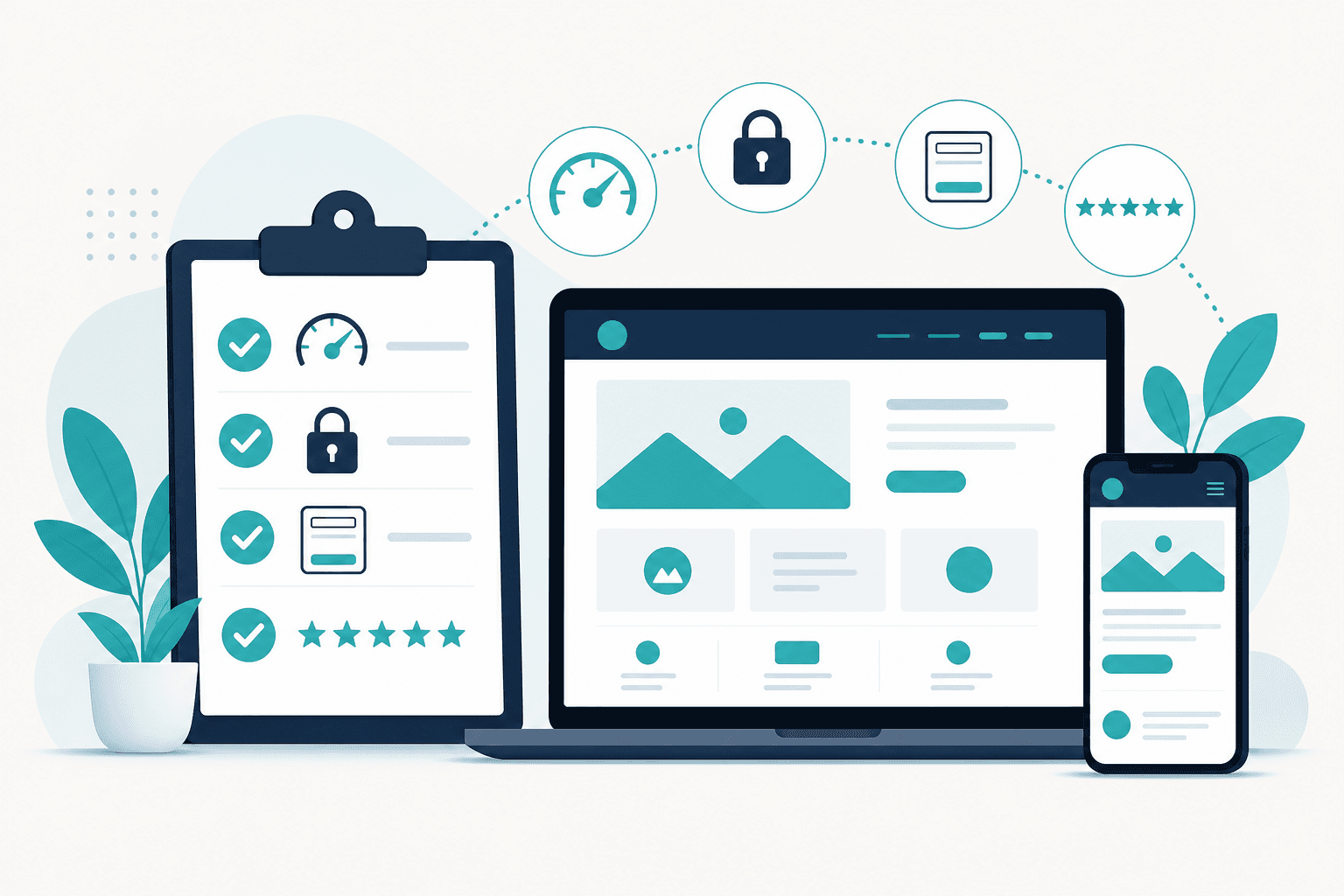
The quick checklist to take with you
Before you approve any website, make sure it includes:
- ✅ Works great on phones
- ✅ Loads in under 2 seconds
- ✅ Clear message up top
- ✅ Easy to contact you
- ✅ Security padlock (SSL)
- ✅ Search basics so Google finds you
- ✅ Reviews and real photos
- ✅ Clear next steps for visitors
- ✅ Reliable hosting and backups
- ✅ Ongoing updates and maintenance
- ✅ Visitor tracking
If your provider checks all of these, you've got a real website. If they're missing several, keep asking questions.
The bottom line
- The essentials aren't optional: mobile-friendly, fast, clear, contactable, secure, and findable.
- Trust builders (reviews, real photos, clear next steps) are what actually win customers.
- The boring upkeep (hosting, backups, maintenance) keeps it all working.
- Skip the fluff. Pay for what your customers will use, not what sounds impressive.
A great small business website isn't the one with the most features. It's the one that loads fast, builds trust, and makes it easy to become your customer.
Every Bizy Site plan includes the essentials by default, mobile-ready, fast, secure, search-friendly, and fully maintained, on one simple monthly fee. See how it works →